
The Serengeti, named by the Maasai, translates to “endless plains” or “the land that runs on forever,” reflecting its vast, unbroken landscapes
About Serengeti
Legend has it that the word Serengeti emanates from the people who have occupied this pristine land for aeons–the Maasai. Roughly translated, it means the endless plains, or “the place where the land runs on forever”.
Proclaimed in 1952, and covering 14,763 km2 (5,700 sq mi) – an area larger than Connecticut or Montenegro – in the eastern Mara Region of northern Tanzania, the Serengeti National Park is revered by nature-lovers worldwide as one of the most populous wildlife destinations.
Stretching north to Kenya and bordering Lake Victoria to the West, the diverse habitats within make it the perfect home for creatures great and small. It is also cherished as a World Heritage Site, both for the wildlife it is home to and the abundant relics of prehistoric mankind.
As its name suggests, the overwhelming impression given by the Serengeti is of vast, open spaces dotted with granite kopjes (rock outcrops), flat-topped acacia trees, and undulating grasslands.
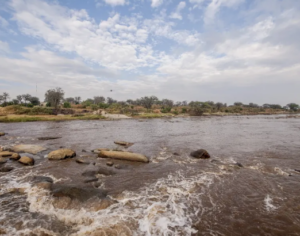
Only two permanent rivers pass through the park, although numerous gullies rise in spate when good rains fall.


Closing your eyes, the serenade of Nature soothes the atavistic brain, while her various scents arouse the senses even further.
The near-pristine wilderness aside, Serengeti National Park is most famous for the prolific wildlife that roams the ancient plains. Huge herds of plains game, estimated at some 2 million ungulates, roam the various habitats; grazing, browsing and fertilizing the land they traverse.
The massive herbivorous biomass in turn provides ample hunting opportunities for Africa’s legendary large predators perpetuating the unceasing circle of life and death on the African plains. Here too, visitors are blessed with myriad species of birds and plants–each adding to the awe of nature’s complexity and diversity.
By road, the Serengeti National Park is 335 km (208 mi) from Tanzania’s safari hub, Arusha. By air, seven airstrips service different regions of the park.
Highlights
The Great Migration
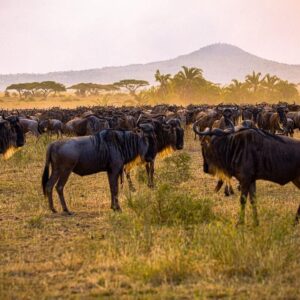
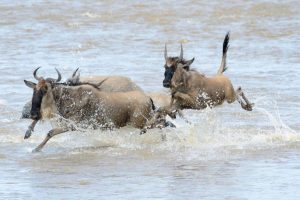
the annual migratory circuit of over a million wildebeest and other ungulates, draws predators and tourists alike.
River Crossings
Ungulates run the gauntlet of predators waiting at the rivers they must cross during the migration.
Predators
the abundance of prey means Serengeti boasts the greatest concentration of large predators, including lion, cheetah, leopard, and spotted hyena, on earth.
Pristine Habitats
Careful management of the environment ensures a diversity of habitats; home to innumerable species of fauna and flora.
Excellent Infrastructure
Easily accessible with a vast network of roads, several airstrips and a huge variety of accommodation options.
Retina Hippo Pool
Home to some 200-honking, jostling hippos – a cacophonic sight in central Serengeti, not to be missed.
Bologonja Springs
Seldom visited natural springs that offer both tranquillity and diverse sightings at the water and nearby salt lick.
Moru Kopjes
Your best chance of seeing Serengeti’s heavily protected black rhinos amid the dense bush around the rocky outcrops.
Regions of the Serengeti
Central Serengeti (Seronera)
Also known as the Seronera Valley, this region is the location of many of Serengeti’s permanent lodges, and the main airstrip within the park. As such, the volume of tourists (and vehicles) in the area is typically high, particularly in the peak season. This can be a drawback when game viewing. The valley usually teems with wildlife, with herds of zebra, wildebeest, various antelope species, as well as elephants in abundance. This in turn means there is a very good chance of sightings of the park’s large predators – lions, cheetahs and spotted hyenas. The Seronera region is commonly referred to as Africa’s Big Cat Capital and is said to be the best place within Serengeti to spot the elusive leopard. The landscape is a gently undulating acacia (Vachellia sp.) savanna, where the game is easily viewed. The Great Migration typically moves through this area from April to June and October to December.
Western Corridor and Grumeti
Northern Serengeti
Southern Serengeti
Activities
Game Drives
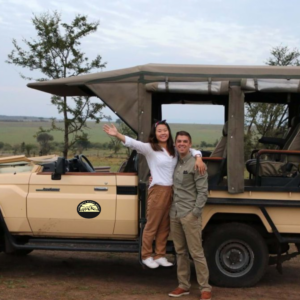
Setting out in the cooler hours of the day when the wildlife is most active, you will travel in a customized safari vehicle with an experienced guide in search of Africa’s big game. Full-day options are also available.
Hot Air Balloon Trips
In the early morning, when conditions are most favourable, you can drift in near silence above the wildlife dotting the expansive plains.
Night Game Drives
These are not permitted within the national park, but can be arranged in neighbouring wildlife areas.
Holistic Practices
Some lodges offer wellness treatments and yoga classes.
Maasai Cultural Experiences
Visit a traditional Maasai manyatta to learn more about this fascinating and ancient culture.
Bird Watching
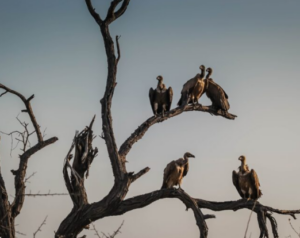
There are 542 recorded species, of which 11 are endemic. Migrant species are present from November to April.
Wild Life
Great Migration: World’s Greatest Wildlife Event
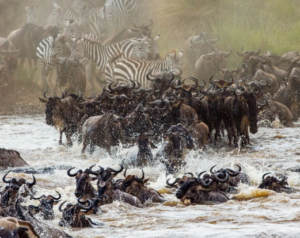
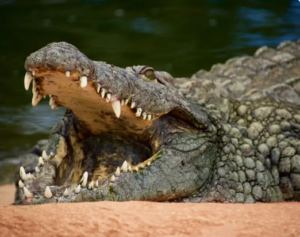
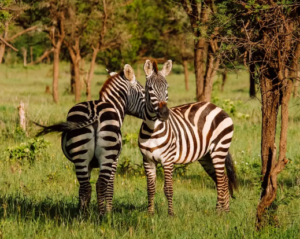
The Great Migration is often called “The Greatest Show on Earth” with good reason. The second largest migration of large mammals on the planet comprises a mixed herd of over a million wildebeest, 400 000 zebras, and a variety of antelope such as eland and Thomson’s gazelle. Outside of the migratory periods, the wildlife disperses to mix with other species of herbivores–such as kudu, impala, giraffe, topi, Cape buffalo, and warthogs, to name a few. In the rivers and water holes, hippos and crocodiles are abundant.
Abundant Wildlife
For the Bird Enthusiasts
Landscape
Weather and Climate
Best Time To Go
- Dry Season
- Migration Season
- High Season
- Low Season
The Dry Season in the Serengeti runs from June to October. The sparse vegetation at this time assists with game viewing, and it is considered the best time to visit. Rain is not expected, but may amount to brief afternoon showers.