Ngorongoro Crater

Ngorongoro Crater

Category:

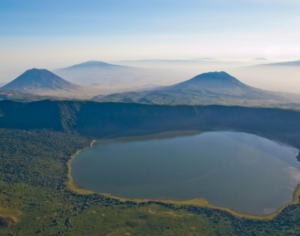
Two million years ago a volcano thought to have been slightly taller than Mt Kilimanjaro erupted with such force that the mouth of the volcano imploded. Once the dust settled, what remained is still the largest intact caldera on earth – the Ngorongoro Crater.

Overview and Wildlife Habitat

The crater spans 260 km² (100 mi²), with its rim 610 metres (2000 ft) high. An eruption enriched the area with mineral-rich dust, fostering fertile soils. Underground rivers feed springs, bringing nutrients to the surface.

This environment supports permanent water sources, attracting animals. Their presence enriches the soil further, creating a productive grassland. Over time, swamps and forests emerged, hosting the planet’s densest concentration of large mammals.
Conservation History and Tourism

Ngorongoro Crater, named after the resonant sound of cattle bells once filling its expanse, has evolved from human habitation to a premier wildlife sanctuary. The removal of settlements enabled its transformation into a globally celebrated wildlife haven. It now stands as the core of the Ngorongoro Conservation Area, a World Heritage Site since 1959, lauded for its rich biodiversity and archaeological significance, including the pivotal Olduvai Gorge.

Flanked by the Serengeti and game-controlled zones, it forms a vast conservation mosaic where the Maasai people continue their traditional nomadic life, albeit without cattle grazing within the crater to protect its ecosystem. The crater, a biodiversity hotspot, shelters an estimated 25,000 large mammals.
Regulation and Access

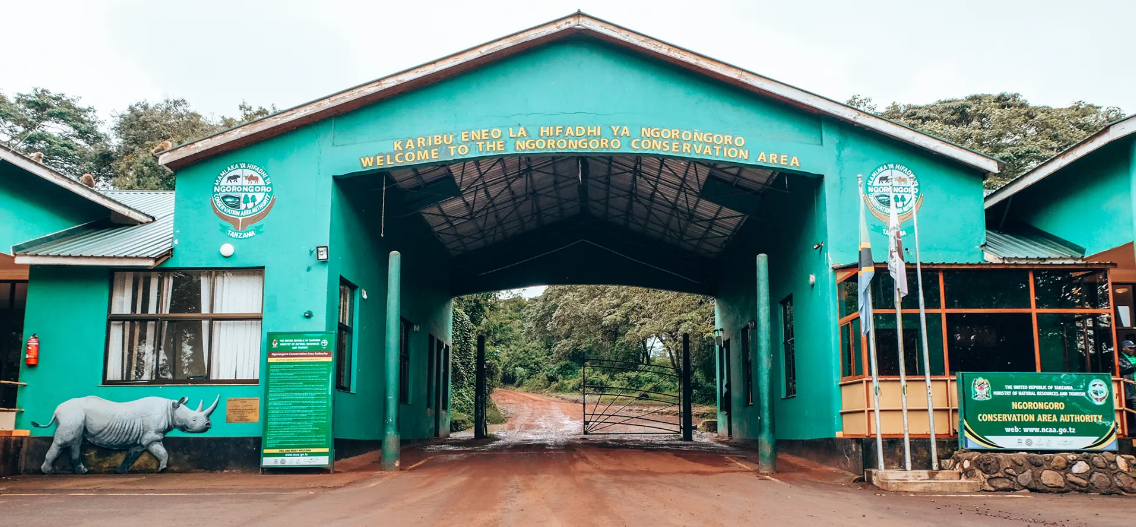
Various tourism regulations within the crater distinguish the safari activities from the norm. No walking safaris are allowed and all the vehicles must leave the crater by 16h30, and as such, no night game drives are possible. Visitors can however enjoy these activities and more at locations outside the crater. There are a few lodges perched on the crater rim, although the majority that visit for safari excursions are generally within an hour’s drive. Long queues at the entrance gates necessitate an early start to maximise your viewing time. Two to three days are suggested to properly explore the crater. There is no airstrip within the crater and the nearest entrance gate is 180 km (110 mi) west of Arusha, where an entrance fee is payable, over and above other transit fees and expenses along the way.

Highlights Within Ngorongoro Crater

Picnic

There is a picnic area at the Ngoitokitok Springs where visitors can stretch and enjoy a meal.

Game Viewing

With an incredible diversity and abundance of game, visitors are all but assured of great sightings year-round.

Bird-watching

Over 500 species are represented in the overall conservation area, ranging from waterbirds to raptors.

Within the Ngorongoro Conservation Area

Olduvai Gorge

The site of some of the most significant finds relating to human evolution were made at this site, with a museum and guided tours.

Maasai or Hadzabe Cultural Experience

Guided tours can be arranged to gain insight into the history and traditions of these fascinating cultures.

Hiking

Guided walks on the crater rim and the surrounding landscape of the NCA can be arranged.

Hot Air Balloon Trip

Drift quietly over the savanna – a special treat when the Great Migration is underway.

Different areas of the Ngorongoro Crater & Ngorongoro Conservation Area

Within the Ngorongoro Conservation Area

Lake Makat (Magadi)
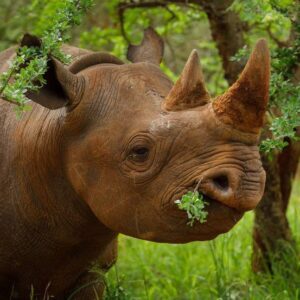
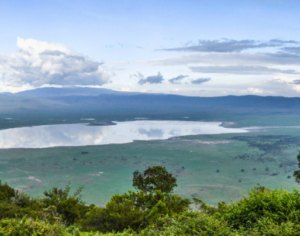
This shallow soda lake that is fed by both rainfall and various rivers, adds a flash of colour, particularly when the surrounding grasslands are dry. Adding to the lush green on the banks, an incredible array of birds are found both in and around the water. Perhaps most colourful of these are the many thousands of lesser flamingos that feed on the algae in the shallows. The algae, in combination with bacteria, turns the plumage of the birds a lovely pink. Rafts of hippos pass the day in the water before leaving to graze overnight. Adjacent to the lake there is numerous mud wallows frequented by Cape buffalo, elephants, black rhinos, and warthogs.
Lerai Forest
Compared to the sparse vegetation on the south-facing slopes of the caldera, the vegetation on the north-facing slopes is relatively dense, particularly in the area known as the Lerai Forest in the southwest. The thicker layer of soil accumulated at the base of the slope means that large trees can establish their root structures and thrive in the temperate climate. Of these, the distinctive yellow-barked fever tree (Vachellia xanthophloea) stands out, along with the twisted trunks of fig trees. The trees are home to numerous bird species, along with vervet monkeys, Olive baboons and tree hyraxes. The trees also offer sanctuary to the few leopards present within the crater. Massive bull elephants collect seed pods and bark alongside bushbuck, eland and waterbuck. Some say this is the best place to spot black rhinos.
Ngoitokitok Springs Picnic Area and Swamp
With much of the day confined in a vehicle, a visit to the springs offers a welcome opportunity to stretch and enjoy a packed picnic lunch overlooking a small lake created by the springs that bubble up from the earth. Within the water, hippos and waterfowl are almost constantly active. Stately elephant bulls and other wildlife often come down to drink. Birdlife is also prolific.

Beyond the Crater

1. Western Highlands
Roughly 30 km (18 mi) northwest of western Ngorongoro Entrance Gate lies the Olduvai Gorge, one of the world’s premier paleo-anthropological sites. There is a museum and tours to learn more about human evolution. In this area, you will also find Lake Ndutu and Masek, renowned for their amazing birdlife. Another worthwhile destination is the so-called Shifting Sands, a near-black dune of volcanic ash that is moving slowly westwards at around 17m (50ft) per annum.
2. Eastern Highlands
This scenically beautiful region is a haven for nature lovers, particularly those who like to explore on foot. Of particular interest is the Empakaai Crater, where a considerable trek will take you to the lake on the crater floor. The views of Mt Kilimanjaro and Lake Natron in the distance, and the sacred mountain of the Maasai Ol Doinyo Lengai (actually an active volcano), make this an area well worth exploring.
3. Southern Highlands
Also seldom visited, this area is rich in spectacular scenery and hiking opportunities. Experienced climbers can summit Mt Lemagarut (3 147m) to enjoy views of the Serengeti, Ngorongoro and Lake Eyasi. There are also opportunities for walking safaris with experienced rangers.
4. Northern Highlands
Geographically part of the Serengeti ecosystem, this area falls under NCA administration. Thousands of wildebeest, zebra and various antelope give birth to their young in this area, before rejoining the circuitous route of the Great Migration.

Activities

Game Drives

With half and full-day options available, visitors accompany an experienced guide to search the crater floor for the Big 5 and other wildlife species. All vehicles must exit the crater by 16h30

Cultural Visit

Gain an insight into the indigenous cultures of the area, with visits to local homesteads.

Picnic

Arrange a catered picnic at a designated site on the crater floor.

Bird-watching

Over 500 species await discovery by the avid birder visiting these parts.

Hot Air Balloon Trip

This tranquil experience offers a unique perspective of the landscape surrounding the crater.

Hiking

Numerous hiking trails criss-cross the landscape from the crater rim to nearby mountains. Note: walking trails are not permitted within Ngorongoro Crater.

Archaeological Excursions

Visit nearby archaeological sites to learn more about the evolution of humankind.

Wildlife

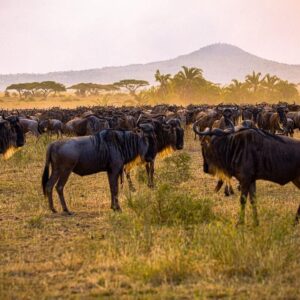
The Ngorongoro Crater is a prime wildlife viewing destination year-round, unaffected by the Great Migration, thanks to its ample food and water. Home to an estimated 25,000 large mammals, its flat terrain and sparse vegetation make spotting animals, especially after rains, easier. The crater boasts one of the highest densities of lions in Africa, though it faces challenges like inbreeding.
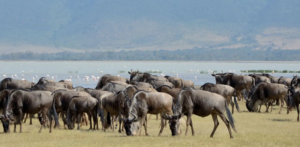
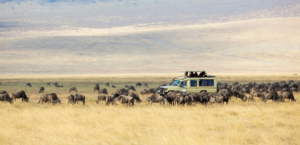
Spotted hyenas are common, while cheetahs, leopards, and African wild dogs are rarer, with leopards mostly in the Lerai Forest. Mega-herbivores such as hippos, buffalos, elephants, and black rhinos are prevalent, except giraffes. It also hosts wildebeest, zebra, warthogs, antelopes, and a rich variety of birds, making it a hub of East African wildlife diversity accessible throughout the year.
Landscape

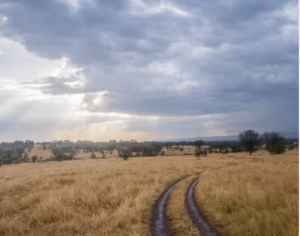
The scenery throughout the conservation area is classic Africa. Gently rolling grasslands give way to hill country, with a few volcanoes rising high above the surroundings. Ravines are often thickly wooded, and numerous rivers snake across the landscape, their banks lined with large trees and lush floodplains.

Within the crater, surrounded by the steep caldera wall, one has the impression of being in a land that time forgot. At the foot of the slopes, forest surrenders to mixed woodland, and as the trees thin out, the flat savanna is a golden sea of grass. Around the lakes, a ring of green vegetation adds colour beneath the crisp blue sky.

Weather and Climate

Overall, the weather across the Ngorongoro Conservation Area is warm throughout the day, cooling significantly through the night, and becoming cold at times. Little rainfall is expected between June and October. From November to May, two periods of rain bring isolated showers, but it seldom rains for the whole day.

Best Time To Go​

Due to the semi-confinement caused by the crater wall, for the most part, the wildlife population within the crater is consistently high.

During the Dry Season (June-September), short grass makes spotting the wildlife easier.

Scroll to Top
Scan the code